
We went to the World’s Biggest Construction Show to find out who WINS.
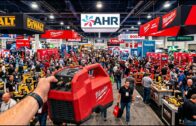
Every contractor, fleet manager, and equipment operator seems to have an opinion about diesel versus electric. Some see electric construction equipment as the future. Others still view diesel as the only serious option for real jobsite performance. So when the biggest construction show in the world brought together more than 140,000 attendees, 2,000 exhibitors, and nearly every major equipment manufacturer on earth, it created the perfect place to get a real answer.
That is exactly why this conversation mattered at CONEXPO.
After years of watching battery technology transform the power tool world, from chainsaws and blowers to circular saws and outdoor power equipment, the next logical question is whether the same shift is now happening in heavy equipment. At CONEXPO in Las Vegas, that question was no longer theoretical. Electric excavators, electric loaders, electric backhoes, hybrid systems, and remote-controlled machines were all on display. Some were concept machines. Some were already commercially available. And some were clearly solving problems diesel was never built to solve.
The biggest takeaway from the show was not that electric is replacing diesel across the board. In fact, nobody we spoke with made that argument. The real story is more practical than that. Electric equipment is not trying to win on diesel’s terms anymore. It is carving out its own lane in construction, and in certain jobs, it is already the best option on the site.
CONEXPO Showed That Electric Construction Equipment Is No Longer a Concept
If there was one theme that kept showing up across the show floor, it was this: electric heavy equipment is now real, and the market for it is growing.
We saw compact electric machines, full-size electric machines, and hybrid designs that are already working on jobsites. More importantly, we heard the same message from multiple manufacturers independently. Electric is not the answer for every application, but there are now many jobs where it is the only practical answer.
That distinction matters.
The most interesting part of the conversation is no longer whether batteries can power a machine. The more important question is what battery-powered equipment allows contractors to do that diesel equipment never could.
That shift in thinking reframes the whole diesel-versus-electric debate.
Why Electric Equipment Is Gaining Ground on Jobsites
The strongest case for electric construction equipment is not ideology. It is application.
On indoor demolition jobs, renovation work in occupied buildings, hospital projects, schools, retail spaces, tech campuses, and facilities with noise or emissions restrictions, electric machines solve problems diesel cannot. If workers, patients, shoppers, staff, or tenants are breathing the air around the machine, exhaust matters. If the project is happening inside a finished space, noise matters. If the flooring must stay protected, track design matters. If a contractor is trying to meet a zero-emissions requirement from a client, electric may not just be a preference. It may be mandatory.
That was one of the most consistent messages at CONEXPO. These are not hypothetical future jobs. Contractors are asking for these solutions now.
The Small Electric Machines May Be the Biggest Wake-Up Call
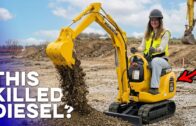
One of the most eye-opening machines at the show was a compact electric excavator small enough to fit in an elevator. That kind of design says a lot about where the market is headed.
For years, certain types of work inside high-rise buildings, hospitals, and other occupied structures had no truly efficient machine solution. Contractors often had to rely on labor-intensive methods simply because diesel equipment was not viable indoors. A compact electric excavator changes that. It can be moved into the building, operated without combustion emissions, and used where a conventional machine would never be allowed.
That is a different kind of value than simply replacing a diesel unit with a battery-powered version. It creates access to jobs and workspaces that previously had no good equipment answer at all.
And that idea kept coming up throughout the event. Electric power is not just about replacing fuel. It is about expanding where equipment can go and what kind of work it can do.
CASE, Takeuchi, Volvo, and Others Are Defining the Electric Equipment Landscape
Several manufacturers stood out for how seriously they are approaching electrification.
CASE brought one of the most complete electric lineups on the floor, including electric mini excavators, an electric compact wheel loader, an electric backhoe, and an electric mini track loader designed specifically for indoor work. That indoor application focus is important because it reflects real customer demand. Specialty interior demolition, occupied-building renovation, and work in sensitive environments all benefit from machines that eliminate exhaust and reduce noise.
Takeuchi brought an electric compact excavator with several years of real-world operating history behind it, not just a showpiece. That kind of market maturity matters because it shows electric equipment is moving beyond prototype status. The company also highlighted customer demand from clean rooms, food processing facilities, hospitals, and corporate campuses with internal electrification goals.
Volvo showed perhaps the clearest picture of how far electric heavy equipment has already come. Their display included more electric construction equipment than any other manufacturer we encountered, including a commercially available 23-ton electric excavator. That is the kind of machine many people still assume does not exist yet. It does, and it is available now.
Electric Excavators Are Bigger, More Capable, and More Practical Than Many Contractors Realize
One of the most compelling moments at the show came from seeing a 23-ton all-electric excavator up close. At that size, the question changes from “Can electric work?” to “How soon will this become normal in the right applications?”
The machine retained the same core structure and hydraulic functionality operators expect. The real difference was the drivetrain. That matters because it helps reduce the learning curve and preserve the working characteristics contractors already know. Operators are not being asked to adopt a completely alien machine. In many cases, they are being offered something familiar with a different power source and a different long-term operating model.
That was another major theme we heard over and over. Operators often step into electric equipment expecting compromise and come away surprised by the response. Instant torque means no waiting for an engine to spool up. Control inputs feel immediate. The machine responds right away.
That kind of performance does not just matter for comfort. It matters for productivity and confidence in the seat.
Runtime and Charging Are Still Important, but the Math Is Changing
Runtime remains one of the biggest concerns around electric heavy equipment, and rightly so. On large jobsites, uptime is everything.
What CONEXPO made clear, though, is that runtime is not as simple as comparing a fuel tank to a battery pack. Electric machines do not consume energy the same way diesel machines consume fuel. When an electric machine is sitting idle while the operator repositions, pauses, plans the next move, or breaks for lunch, it is not burning power the same way a diesel engine burns fuel while idling.
That changes the equation.
Fast charging also continues to improve. Some manufacturers described charging windows that fit naturally into the flow of a workday, including midday top-offs during lunch breaks or between shifts. Others recommended approaching charging the same way many people now treat their phones or electric vehicles: plug in when the opportunity is there rather than running the machine down to empty.
This does not make charging irrelevant, especially on remote or high-demand jobs. But it does show that electric machine ownership depends on a different planning mindset than diesel ownership.
Diesel Still Wins in Several Critical Applications
For all the momentum electric equipment has, CONEXPO did not suggest diesel is disappearing anytime soon.
On remote jobsites with limited or no charging infrastructure, diesel still makes more sense. For applications demanding uninterrupted heavy output over long stretches, diesel remains easier to support logistically. If a machine needs maximum runtime, minimal pauses, and flexibility across changing locations, diesel still has a major advantage.
This was not hidden or downplayed by the manufacturers. In fact, some of the most credible conversations at the show were the ones where product experts openly acknowledged the limits of current electric equipment. That honesty made the broader case for electrification stronger, not weaker.
Electric is not replacing diesel everywhere. It is becoming the better option in a growing number of specific environments, while diesel remains the right call in others.
The Middle Ground May Be the Most Interesting Part of the Market
One of the smartest insights from CONEXPO was that this transition is not binary.
Between fully electric equipment and conventional diesel machines, there is a growing middle ground. Hybrid systems and energy recovery technologies are already improving efficiency on larger diesel-powered equipment. One example we saw used regenerative technology to capture swing energy and store it for reuse, improving fuel efficiency without requiring the machine to go fully electric.
That kind of solution matters because it recognizes a practical reality in heavy construction: not every jobsite is ready for full electrification, but many are ready for better efficiency.
For contractors, fleet managers, and buyers, that means the future is not just electric versus diesel. It is electric where it makes sense, diesel where it still wins, and advanced hybrid or efficiency-focused systems where they offer the best operational value.
Total Cost of Ownership Is Becoming a Bigger Part of the Conversation
Price remains one of the biggest barriers to electric heavy equipment adoption. Upfront cost is still higher in many cases. But the gap has started to narrow.
A few years ago, the premium for electric equipment could be dramatically higher than a diesel equivalent. Now, multiple conversations at the show suggested that premium is shrinking. At the same time, more buyers are looking beyond sticker price and focusing on lifetime operating cost.
That is where electric equipment starts to make a stronger case.
No diesel fuel. No oil changes. No air filters. No DEF fluid. Less exposure to fuel price volatility. Lower routine maintenance. For high-utilization fleets working in the right environment, those savings add up over time.
That total cost of ownership argument may ultimately be more important than the early performance debate. Contractors do not just buy machines based on what they cost today. They buy them based on how they perform, how often they can work, what jobs they unlock, and what they cost over years of ownership.
Safety and Workforce Challenges Are Also Driving Adoption
Another important point that deserves more attention is how electric and remote-operated equipment can improve safety and labor flexibility.
Some of the most interesting machines at CONEXPO were not just electric. They were designed to remove operators from dangerous environments entirely. Remote-controlled compact machines can work in confined, hazardous, or physically punishing spaces where putting a human operator directly in the machine is less desirable.
That changes the conversation from emissions alone to something much broader.
Electric equipment can help contractors address workforce shortages by making difficult jobs easier to staff. It can reduce worker exposure to noise, vibration, and exhaust. It can also create safer workflows in spaces where risk is higher. Those benefits may be just as important as the environmental or operational arguments.
So, Who Wins: Diesel or Electric?
The real answer from CONEXPO is that neither side wins outright.
Diesel still dominates where infrastructure is limited, runtime demands are extreme, and remote jobsite flexibility matters most. That is not changing overnight.
Electric wins where emissions, noise, indoor air quality, operator comfort, safety, and site restrictions matter more than unlimited runtime. In those environments, electric is no longer an experiment. It is already the right tool for the job.
And in the middle, where many fleets operate every day, the economics are starting to shift. Infrastructure is improving. Battery systems are getting better. Charging is becoming faster. Manufacturers are learning which machine classes make the most sense to electrify first. Customers are getting more comfortable with the model. That is exactly how change starts.
It is also exactly how the power tool industry evolved. Battery tools did not replace everything at once. They got good enough for one job, then another, then another, until eventually the question changed. It stopped being “Can battery compete?” and became “Why would I still choose gas or corded here?”
That same transition now appears to be underway in construction equipment, just at a larger scale.
The Future of Heavy Equipment Is Application-Based, Not Absolute
If CONEXPO proved anything, it is that the diesel-versus-electric debate in construction is no longer about theory. It is about matching the right machine to the right job.
Electric heavy equipment is already solving real problems. Diesel still has a major role. Hybrid systems are adding another layer to the conversation. And buyers are starting to evaluate all three through the lens that matters most on a jobsite: performance, logistics, economics, and practicality.
That is the real takeaway from the biggest construction show in the world.
Electric is not coming someday. It is already here. Diesel is not dead. It is still essential. The future is not one or the other. It is a more nuanced, application-driven mix of technologies, and the contractors who understand that early will be better positioned for where the industry is heading next.
